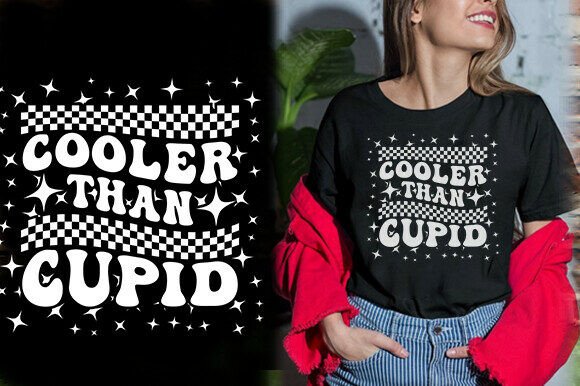
Reviewing the Cooler Than Cupid Vector for Embroidery
As a designer who spends half my life digitizing and the other half stitching, I have learned to look past the flashy mockups on digital marketplaces. We all know that what looks crisp on a screen does not always translate well to thread and fabric. Recently, I came across the COOLER THAN CUPID VECTOR TSHIRT DESIGN, marketed primarily as a funny Valentine’s graphic for print-on-demand sites like Amazon, Shopify, and Redbubble. While the description highlights its utility for POD, my interest was piqued by its potential as a machine embroidery design for custom apparel and handmade goods. Here is my practical assessment of how this asset performs when moved from a digital vector to a physical embroidery project.
First Impressions: Mood and Visual Personality
The immediate appeal of this design lies in its attitude. It subverts the traditional, overly sweet aesthetic of Valentine’s Day with a cooler, more modern vibe. For an Etsy seller or craft business owner, this distinction is crucial. Customers are increasingly looking for personalized gifts that feel authentic rather than generic. The layout suggests a bold, graphic style that relies on strong shapes rather than intricate shading. In embroidery terms, this is often a good sign. Designs with clear boundaries and limited gradient reliance tend to stitch out cleaner, especially on textured fabrics.
When I visualize this as a sweatshirt embroidery piece, the "cool" factor translates well. It feels appropriate for a teen’s hoodie, a quirky couple’s matching set, or even a playful tote bag design for everyday use. The visual personality is confident and slightly irreverent, which helps it stand out in a saturated market of heart-heavy holiday decor.
Real-World Application and Stitching Performance
To test the viability of this concept, I imagined applying it to a few different substrates. Let’s consider a standard cotton canvas tote. The bold lines of the vector would likely convert well into a combination of satin stitch for borders and fill stitch for larger solid areas. Because the design is described as easily customizable, a digitizer could adjust the stitch density to prevent puckering on the canvas. However, one must be cautious. If the original vector has very thin lines or tiny details, these may get lost in the thread buildup.
For custom apparel like t-shirts, the stretch of the fabric is a major variable. A design intended for print might have elements that are too dense for a lightweight jersey knit. If you plan to use this as a digital embroidery file source, you must ensure that any small text or intricate corners are simplified. I recommend using a cut-away stabilizer for t-shirts to maintain shape, whereas a tear-away might suffice for sturdier items like aprons or pillow covers.
Another interesting application is the embroidered patch. Patches allow for higher stitch density without worrying about garment distortion. This design’s graphic nature would pop nicely on a twill backing, making it a viable product for small shop product lines that cater to younger demographics or alternative fashion styles.
Navigating Technical Challenges
While the concept is strong, there are technical hurdles to address before putting this on a customer’s chest. Since the source is a vector intended for printing, it lacks inherent embroidery data. You cannot simply import a SVG or AI file into most embroidery machines without digitizing it first. This means you need to make critical decisions about thread colors and stitch types.
Be particularly careful with curved surfaces, such as caps or hats. The design’s layout needs to be checked for distortion when wrapped around a crown. If the text or graphic elements are too wide, they may warp uncomfortably. Additionally, if you are working with dark fabric, you must account for underlay stitches to ensure the top threads remain vibrant. A lack of proper underlay can result in a muddy appearance, ruining the "cool" aesthetic.
Small hoop sizes also present a challenge. If you are using a 4x4 inch hoop, you may need to crop or simplify the design significantly. Always check the scale. What looks balanced on a large poster mockup can look cluttered on a baby onesie. For baby embroidery, simplicity is key. Ensure there are no tiny, loose ends that could pose a safety hazard or unravel after washing.
Commercial Viability and Brand Consistency
From a business perspective, the COOLER THAN CUPID VECTOR TSHIRT DESIGN offers versatility. The description notes it is copyright-free, which is a significant advantage for commercial embroidery projects. However, "copyright-free" can be ambiguous. Does it mean public domain, or does it mean the seller grants you a commercial license? As a professional, I always advise verifying the specific license terms before selling finished items. Assuming the license permits commercial use, this design can enhance your design assets library significantly.
Using this graphic can boost buyer engagement because it taps into humor. Humor sells. It creates an emotional connection that pure aesthetics sometimes miss. For holiday embroidery collections, having a mix of sweet and sassy designs broadens your customer base. It allows you to target those who might skip traditional Valentine’s merch but would buy something witty and modern.
Practical Designer Notes for Execution
Before you commit to a full production run, follow these steps to ensure quality:
- Test on scrap fabric first: Never stitch a new design directly on a client’s garment. Use similar weight and texture fabric to check for puckering or thread breaks.
- Check thread color contrast: View your digitized version in black and white. If the design loses definition without color, it relies too much on hue rather than shape. Adjust your stitch angles to create contrast.
- Review stitch density: High density looks premium but can make garments stiff. Balance fill areas with open spaces or running stitches where possible.
- Confirm hoop size: Ensure the design fits comfortably within your machine’s maximum area, leaving room for hooping margins.
- Inspect small details: Zoom in on your digitizing software. Are there tiny jumps or unnecessary trims? Clean up the path to reduce production time.
- Verify licensing: Even though the product claims to be copyright-free, keep a record of your purchase and license agreement for your business records.
In conclusion, while the COOLER THAN CUPID VECTOR TSHIRT DESIGN is marketed toward print-on-demand, its graphic strength makes it a promising candidate for embroidery when handled with care. It requires thoughtful digitizing to respect the limitations of thread and fabric, but the payoff is a unique, high-value handmade product that stands out. For the creative entrepreneur willing to put in the technical prep work, this design can be a standout addition to a spring or Valentine’s collection.