Slicked Back and Stressed Hair Bun: A Designer’s Review
As an embroidery designer who has spent years digitizing patterns and critiquing finished products, I have learned that the best designs are not just visually striking—they are technically sound. When I first opened the Slicked Back and Stressed Hair Bun file, my immediate reaction was one of recognition. This is not just a graphic; it is a mood. It captures that specific, relatable tension of modern womanhood: the effort to look composed while internally managing chaos. For those of us in the craft business, finding a design that balances aesthetic appeal with stitchability is rare. This piece manages to do both, provided you understand its nuances before hitting the start button on your machine.
First Impressions and Visual Personality
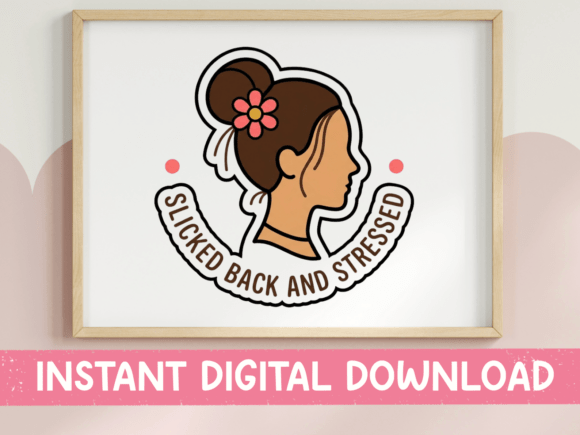
The illustration features a side-profile of a woman with a sleek brown bun, accented by a single pink flower. The lines are clean, suggesting a modern, minimalist approach that translates well into thread. Unlike overly complex portraits that require thousands of stitches and hours of machine time, this design relies on strong silhouettes and strategic color blocking. The "slicked back" hair implies smoothness, which in embroidery terms usually calls for consistent satin stitches or dense fill stitches to avoid gaps. The pink flower adds a necessary pop of contrast, breaking up the monochrome feel of the hair and skin tones.
From a branding perspective, this design fits squarely into the category of T-Shirt Designs and general Graphics that resonate with a contemporary audience. It does not scream for attention; rather, it invites a closer look. This subtlety is crucial for high-end handmade products where the value lies in the quality of the execution rather than the loudness of the image.
Real-World Application: The Tote Bag Test
To truly evaluate a machine embroidery design, you must imagine it on a physical product. I recently considered this design for a custom canvas tote bag project for a local boutique. Canvas is a sturdy fabric, but it has a distinct texture. The question was: would the details of the bun and the flower get lost in the weave?
In this scenario, the Slicked Back and Stressed Hair Bun performed admirably. The bold outlines of the profile held up well against the textured background. However, the success relied heavily on the choice of stabilizer. Using a cut-away stabilizer ensured that the fabric did not pucker around the denser areas of the hair. For an Etsy seller looking to create a standout tote bag design, this image offers a perfect blend of humor and elegance. It appeals to customers who appreciate wit but still want a product that looks polished enough for daily use.
Versatility Across Product Lines
Beyond tote bags, this design shows promise in several other categories. For sweatshirt embroidery, the design’s simplicity is an asset. Heavy fabrics like fleece or French terry can distort intricate details, but the broader shapes in this profile remain clear. It also works well as an embroidered patch. Patches allow for higher stitch density without worrying about fabric distortion, meaning you can maximize the richness of the brown and pink thread colors.
For baby embroidery or nursery decor, caution is advised. While the image is gentle, the theme of "stress" might not align with the typical joyous messaging of baby items. However, for a new mother’s gift—perhaps a personalized robe or a large pillow cover—it could serve as a humorous, empathetic nod to the realities of parenthood. In the realm of holiday embroidery, this could be adapted for Galentine’s Day or Mother’s Day, positioning it as a gift for the woman who holds it all together.
Technical Considerations for Embroiderers
While the design is appealing, practical application requires attention to detail. Here are key technical factors to consider before stitching:
- Hoop Size and Placement: Ensure your hoop size accommodates the full height of the profile. Crowding the design near the edge of the hoop can lead to registration errors.
- Stitch Density: Check the density of the hair section. If it is too dense, it may cause perforation in lighter fabrics. If too sparse, the backing will show through. Always test on scrap fabric first.
- Fabric Texture: On thin or stretchy fabric, the design may pull. Use appropriate stabilizers and consider backing the area with interfacing if stitching on custom apparel like t-shirts.
- Color Contrast: The design relies on the contrast between the brown hair, skin tone, and pink flower. On dark fabrics, you may need to adjust the thread colors or add a white underlay to ensure visibility.
It is essential to note that specific technical data such as exact stitch count, file formats, or machine compatibility are not included in the basic description. As a professional, you must verify these details in the actual digital embroidery file before purchase. Confirm whether the design is optimized for specific hoop sizes or if it requires resizing, which can affect stitch integrity.
Commercial Viability and Brand Consistency
For small shop product creators, consistency is key. The Slicked Back and Stressed Hair Bun fits well within a brand identity that values authenticity and modern femininity. It is not a generic clipart image; it has personality. This helps in building customer trust and engagement. When used in printable mockups or online listings, the design stands out because it tells a story.
However, commercial use requires diligence. Before selling finished items or design assets, confirm the licensing terms. Some designers allow unlimited commercial use, while others restrict the number of physical items you can sell. Never assume; always read the license agreement associated with the embroidery file.
Avoiding Common Pitfalls
There are scenarios where this design should be used carefully. Avoid placing it on highly textured fabrics like heavy wool or looped towels without extensive testing, as the fine lines of the face profile may become distorted. Similarly, be cautious with curved surfaces like caps. The side profile needs a relatively flat surface to maintain its proportions. If stitching on a cap, consider using a specialized cap frame and adjusting the pull compensation settings in your software if you have the capability.
Additionally, watch out for tiny lettering if the design includes any text elements not mentioned in the primary description. Small text often requires specialized fonts and high-resolution digitizing to remain legible after washing. If the design is purely graphical, as described, focus on the clarity of the outline stitches.
Final Verdict for the Modern Maker
The Slicked Back and Stressed Hair Bun is a compelling addition to any embroidery designer’s library. It bridges the gap between artistic expression and commercial viability. For the craft business owner, it offers a unique selling point: a design that speaks directly to the customer’s experience. For the hobbyist, it provides a satisfying project that results in a professional-looking finished product.
Remember, the quality of the final item depends not just on the design, but on your preparation. Test your thread colors, choose the right stabilizer, and respect the limitations of your fabric. When executed with care, this design elevates simple garments and accessories into meaningful, conversation-starting pieces. It is a reminder that even in the midst of stress, there is beauty—and with the right tools, there is also excellent craftsmanship.