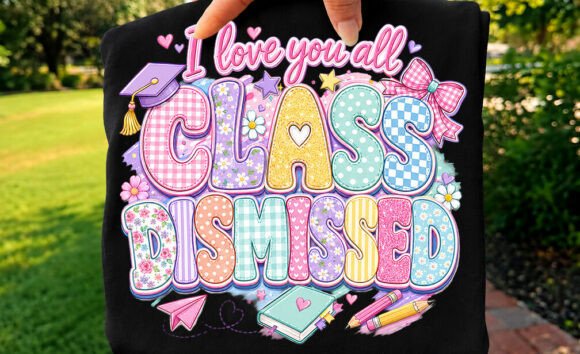
Review: I Love You All Class Dismissed Shirt PNG
As a designer who has spent years translating digital concepts into tangible, stitched realities, I approach every new asset with a mix of curiosity and skepticism. We have all been there: downloading a digital embroidery file or graphic that looks stunning on a screen, only to watch it pucker, distort, or lose its charm once the needle hits the fabric. Today, I am taking a close look at the I Love You All Class Dismissed Shirt PNG. While this asset is marketed primarily as a sublimation-ready graphic for T-Shirt Designs, its potential extends far beyond heat presses if we approach it with the right technical mindset.
First Impressions and Visual Personality
The first thing that strikes me about the I Love You All Class Dismissed Shirt PNG is its playful, nostalgic energy. The typography suggests a blend of retro schoolhouse aesthetics and modern casual wear. It is not just text; it is a mood. For those of us in the craft business, mood sells. The layout is balanced, with a clear hierarchy that guides the eye. However, as an embroidery specialist, my immediate concern is translation. How does this flat, high-resolution image translate into thread?
The file provided is a print-ready PNG at 4500×5400 pixels with 300 DPI. This is excellent for sublimation, vinyl cutting, or direct-to-garment printing. But for embroidery, this is a reference image, not a stitch file. If you are planning to use this as a base for creating a custom machine embroidery design, the clarity of the lines is a huge plus. The edges are crisp, which makes digitizing significantly easier. There is no guesswork involved in tracing the letterforms or understanding the intended spacing.
Real-World Application: Beyond the T-Shirt
Let’s move past the obvious t-shirt application. I recently worked on a project for a local teacher who wanted end-of-year gifts for her staff. She was torn between printed shirts and something more tactile. I pulled up the I Love You All Class Dismissed Shirt PNG to mock up what it could look like as an embroidered patch or directly stitched onto a heavy cotton tote bag.
The result was promising. On a canvas tote bag design, the bold nature of the phrase holds up well. The "Class Dismissed" element, often rendered in a contrasting style in these types of Graphics, creates a nice visual break. If you were to digitize this for a sweatshirt embroidery project, the thick strokes of the primary font would support a dense fill stitch without becoming too stiff. For a personalized gift, this kind of humor resonates deeply. It is not just apparel; it is a conversation starter.
Consider also the baby embroidery market. While the phrase is school-themed, the playful font could be adapted for a "first day of preschool" onesie. Here, however, caution is key. The scale must be reduced, and the stitch count managed carefully to avoid irritating sensitive skin. This is where the original PNG serves as a perfect template for resizing and simplifying before digitization.
Technical Considerations for Stitching
Since the I Love You All Class Dismissed Shirt PNG is a raster image, you cannot simply load it into your embroidery machine. You must digitize it or commission a digitizer. Here is where my experience as a reviewer comes into play. When converting this specific design, pay close attention to stitch density.
- Small Details: If the design includes small decorative elements or thin connecting lines, these may need to be converted to running stitch or simplified. Tiny details often get lost or cause thread breaks if attempted with complex fills.
- Lettering Spacing: Ensure there is enough space between letters to prevent pull compensation from merging them. This is crucial for legibility, especially on textured fabrics.
- Fabric Choice: This design works best on stable fabrics like cotton twill, denim, or heavy jersey. Avoid highly stretchy materials unless you use a robust stabilizer system.
If you are using this for commercial embroidery projects, such as bulk orders for a school bookstore, consistency is vital. Test the design on scrap fabric first. Check how the thread colors interact with the fabric background. A dark navy thread on a black shirt might disappear, so consider using a satin border or a lighter shade to create definition.
Navigating Fabric and Hoop Constraints
One common mistake makers make is ignoring the physical limitations of their equipment. The I Love You All Class Dismissed Shirt PNG is likely designed to fit across the chest of a standard adult shirt. If you are working with a smaller hoop size, such as a 4x4 inch hoop for caps or patches, you will need to crop or stack the design. Stacking can be tricky; ensure the registration aligns perfectly to avoid a disjointed look.
Curved surfaces, like the front of a baseball cap, present another challenge. The design must be arched digitally to appear straight when stitched. Without this adjustment, the text will look like it is sagging. For holiday embroidery items like pillow covers or tea towels, the flat surface is forgiving, but you must still account for fabric weave. A loose weave might require a cut-away stabilizer to prevent distortion over time.
Enhancing Product Value and Brand Consistency
Why go through the trouble of embroidering when sublimation is easier? The answer lies in perceived value. An embroidered item feels premium. It suggests durability and craftsmanship. For an Etsy seller or small shop product line, offering an embroidered version of a popular graphic like this can justify a higher price point. It differentiates your handmade product from mass-produced prints.
Furthermore, embroidery adds texture. The interplay of light on satin stitch borders versus matte fill stitches creates depth that ink cannot replicate. This tactile quality enhances customer trust. When a buyer receives a package and feels the raised stitching, they perceive higher quality. This is essential for building brand loyalty in the competitive world of custom apparel.
Practical Designer Notes
Before you commit to production, keep these practical tips in mind:
- Verify Licensing: The product description mentions it is a PNG for sublimation. Always confirm with the creator if you have the rights to use the design for commercial embroidery sales. Intellectual property rights vary, and clarity here protects your business.
- Mockup Testing: Use the high-resolution PNG to create realistic mockups. Place the design on various garment colors in Photoshop or Canva. This helps you visualize contrast issues before you stitch a single thread.
- Stabilizer Selection: For knit fabrics like t-shirts and sweatshirts, use a soft cut-away stabilizer. For woven fabrics like tote bags, a tear-away might suffice, but cut-away offers better long-term stability for larger designs.
- Thread Quality: Invest in high-quality polyester or rayon threads. Cheap thread can shred during high-speed stitching, ruining the clean lines of the text.
In conclusion, the I Love You All Class Dismissed Shirt PNG is a versatile asset. While it is sold as a sublimation graphic, its clean lines and strong typographic presence make it an excellent candidate for embroidery digitization. Whether you are creating design assets for a client, preparing printable mockup portfolios, or stitching up a batch of finished product for a craft fair, this design offers a solid foundation. Just remember: the magic happens not in the download, but in the thoughtful translation from pixel to stitch.