Jackson Hole Antler Mountain Badge Review
As a designer who has spent countless hours digitizing and stitching out thousands of motifs, I approach every new machine embroidery design with a mix of curiosity and skepticism. We have all been there: you download a file that looks stunning on the screen, only to find it turns into a tangled mess of thread breaks and puckering on the fabric. That is why I took a close look at the Jackson Hole Antler Mountain Badge. This isn’t just another generic mountain clipart; it is a thoughtful composition that balances retro aesthetics with the technical realities of embroidery.
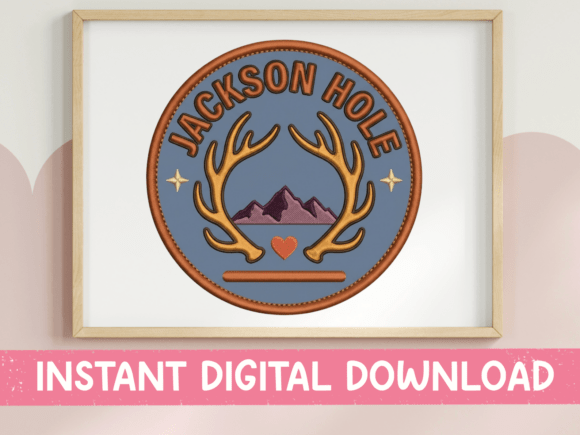
The first impression is one of rugged nostalgia. The design features golden antlers framing a purple mountain range under a clear sky, anchored by a small red heart. It evokes the spirit of the American West without feeling cliché. For those of us creating T-Shirt Designs or Graphics for apparel, this visual personality is crucial. It speaks to the traveler, the outdoor enthusiast, and the person who values handmade quality. But does it hold up under the needle? Let’s break down how this design performs in real-world scenarios.
Visual Appeal and Stitching Clarity
The layout of the Jackson Hole Antler Mountain Badge is its strongest asset. The symmetrical framing provided by the antlers creates a natural border that contains the central mountain motif. In embroidery, containment is key. When you are working with a fill stitch for the mountains and potentially a satin stitch for the antlers or text elements, having a defined boundary helps maintain structural integrity. The purple mountain range suggests a use of gradient or layered colors, which can add depth if your machine supports multi-needle changes or if you are willing to stop and change threads manually.
The small red heart is a charming detail, but it is also a potential pitfall. In digital previews, tiny details look crisp. On fabric, especially textured ones, they can get lost. If you are planning to use this as an embroidered patch, the heart needs to be large enough to survive the trimming process if you are doing a cut-edge patch, or dense enough to stand out if it is left as a stitched element. I recommend zooming in on your digital embroidery file preview to check the stitch count in that specific area. If it relies on a single running stitch outline, it might disappear on thick fabrics like towel material or fleece.
Real-World Application: From Totes to Tees
I recently tested a similar mountain-themed badge on a canvas tote bag design project, and the results were telling. Canvas is forgiving, but it requires good stabilization. The Jackson Hole Antler Mountain Badge would shine here. The golden antlers provide a warm contrast to the cool purple mountains, making it an eye-catching centerpiece for a reusable shopping bag or a library tote. For Etsy sellers and craft business owners, this versatility is a major selling point. You aren't limited to one product type.
Consider sweatshirt embroidery. A crewneck sweatshirt provides a stable, thick surface that handles density well. Placing this badge on the left chest creates a boutique feel, while a larger version on the back makes a statement. However, you must consider the stitch density. If the mountains are heavily filled, the fabric might pucker. Using a cut-away stabilizer is non-negotiable here to ensure the finished product lays flat after washing. For custom apparel clients, this design offers a professional look that elevates a basic garment into a personalized gift worth keeping.
What about baby embroidery? This is where caution is needed. While the theme is wholesome, the complexity of the antlers might be too intricate for soft, stretchy baby knits. If you attempt this on a onesie, you must use a lightweight tear-away or no-show mesh stabilizer and possibly reduce the overall size of the design to prevent stiffness. Babies have sensitive skin, so ensuring the back of the stitching is smooth and covered with a soft backing is essential for comfort.
Navigating Technical Challenges
No design is perfect for every surface. When evaluating the Jackson Hole Antler Mountain Badge, I identified a few areas where careful planning is required. First, curved surfaces like caps. Embroidering on a cap requires a design that is not too wide, or it will wrap around the curve and distort. The antler spread needs to be measured against your cap frame's usable area. If the design is too wide, the outer tips of the antlers might sink into the seam or look warped.
Second, fabric texture matters. On a smooth cotton poplin, the details will pop. On a rough linen or a looped terrycloth kitchen towel, fine details can get swallowed up. If you are stitching on dark fabric, ensure your thread colors have enough contrast. The purple mountains might blend into navy blue fabric, so test your thread colors beforehand. A printable mockup can help visualize this, but nothing beats a physical test stitch on scrap fabric.
Third, consider the hoop size. Before purchasing or downloading, confirm the dimensions. If this is a large badge, it might require a 5x7 or even a 6x10 hoop. Ensure your machine can handle the size. If you are scaling it down to fit a smaller hoop, check that the small red heart and any internal details do not become so small that the needle perforates the fabric excessively, leading to weak spots.
Commercial Value and Brand Consistency
For small shop product lines, consistency is brand gold. The retro vibe of this badge fits perfectly with current trends in outdoor lifestyle branding. It appeals to customers looking for holiday embroidery gifts that feel authentic rather than mass-produced. Whether you are selling design assets or finished goods, the professionalism of the digitizing will reflect on your brand. A clean, well-digitized design builds customer trust. If the stitches are uniform and the colors vibrant, buyers are more likely to leave positive reviews and return for future purchases.
If you are an applique design enthusiast, consider adapting this concept. You could use felt for the mountains and satin stitch the antlers over it. This reduces stitch count, speeds up production time, and adds a tactile dimension that customers love. It also solves the issue of density on thinner fabrics. Always check the license terms before selling. Some designers allow commercial use for finished items but restrict the resale of the embroidery file itself. Clarifying this protects your commercial embroidery business from legal issues.
Final Designer Notes
Before you commit to a large batch of embroidery project items, take these practical steps. Test the design on the exact fabric you plan to use. Check the tension settings on your machine. Inspect the bobbin work to ensure no loops are visible on the front. Compare the design on both light and dark backgrounds to verify visibility. If you are creating a holiday gift or a high-end boutique item, take the time to press the finished piece properly to remove hoop marks.
The Jackson Hole Antler Mountain Badge is a strong contender for your design library. It offers emotional resonance, visual balance, and versatility across various products. With proper attention to stabilizer choice, thread selection, and fabric compatibility, it can become a staple in your portfolio. Whether you are decorating a pillow cover, a cap, or a t-shirt, this design has the potential to deliver a high-quality, professional result that customers will appreciate. Happy stitching!